Free template
Menopause Health Education Presentation for Community Workshops
This menopause PPT template gives health educators an eight-slide workshop in plain, reassuring language. The deck opens with a Menopause, understood cover, then sets out three stage terms on a connected flower timeline: perimenopause as the transition, menopause as a milestone confirmed after 12 months without a period, and postmenopause as the years after, citing WHO and NICHD. Later slides cover questions worth asking beside an illustrated journal and a fictional sleep-diary scenario, three wellbeing areas of sleep and daily energy, physical comfort and emotional wellbeing, a topic, observation and question table for preparing a clinician conversation, and an example support map linking healthcare professionals, trusted people and workplace or community support. A three-step learning activity and a takeaways slide with references close the session. Deep plum headings, lilac watercolor blooms and sage leaves on warm ivory paper keep this medical education presentation calm and non-clinical, and the editable PowerPoint slides can be converted for Google Slides.
Explore Deckgist's AI presentation maker to turn workshop notes and health education handouts into structured, editable presentations.
Create a presentation with AI
Enter a topic or upload reference files, then choose a theme to create a new presentation.
Create with a theme
Enter a topic or upload reference files, then choose a theme to create a new presentation.
Supports documents, PDFs, PPTs, and text files
Generate an editable presentation
AI organizes your content and completes the layout
No topic or upload needed
No topic or upload needed
What’s included
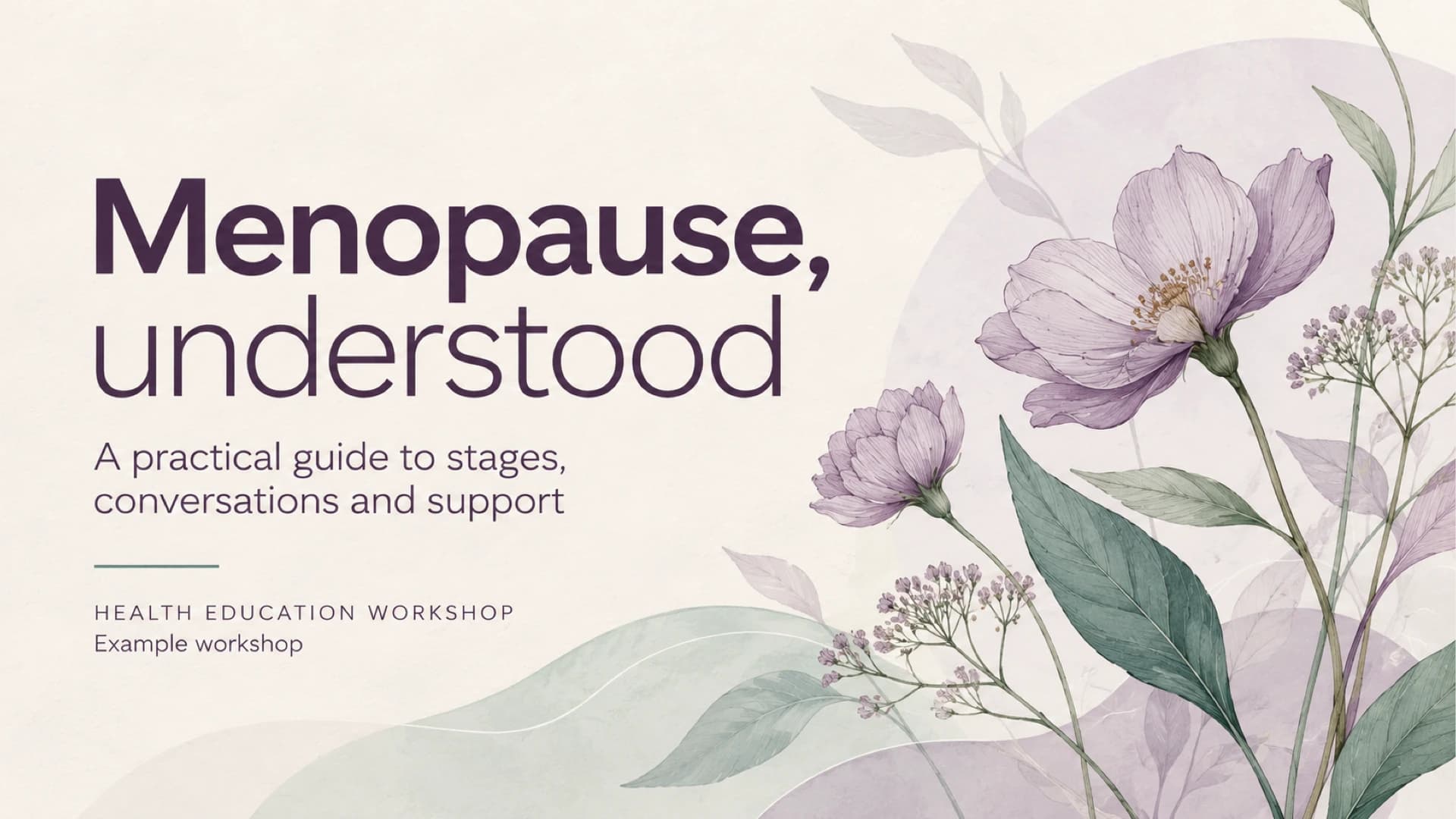
Menopause, understood
Cover slide introducing a health education workshop that offers a practical guide to menopause stages, conversations and support.
Show full textCollapse
Three terms, one life transition
A stage timeline explaining perimenopause, menopause and postmenopause, noting that natural menopause is confirmed after 12 months without a period and that experiences vary.
Show full textCollapse
Questions worth asking
Three reflective questions about noticed changes, sleep and what to bring to a clinician, with a fictional example of a person bringing a two-week sleep diary to a conversation.
Show full textCollapse
Wellbeing is more than one symptom
Three connected wellbeing areas to discuss during menopause education: sleep and daily energy, physical comfort, and emotional wellbeing, with a reminder to discuss concerns with a healthcare professional.
Show full textCollapse
Prepare for a useful conversation
An example table pairing topics such as sleep, daily life and priorities with an observation and a question to bring to a healthcare professional, marked as fictional and not medical advice.
Show full textCollapse
Build a circle of support
An example support map showing three sources of support: a healthcare professional for individual questions, trusted people for practical needs, and workplace or community resources.
Show full textCollapse
Turn learning into a next step
An example workshop activity with three numbered steps: explain the stage terms in your own words, write one question for a future conversation, and identify one support resource to explore.
Show full textCollapse
Clarity, conversation, support
Closing slide with three takeaways on understanding stage terms, preparing questions and exploring support, followed by WHO and NICHD menopause references.
Show full textCollapse
Best for
- Lead a community menopause awareness workshop for adults in midlife
- Explain the difference between perimenopause, menopause and postmenopause
- Help participants prepare questions before speaking with a healthcare professional
- Introduce sources of support from trusted people, workplaces and community services
- Close a health talk with a short written learning activity and key takeaways
Who this template is for
- Health education lecturers
- Community health talk organizers
- Public health outreach teams
- Workplace wellbeing program leads
- Women's health educators
Features of this template+
- Three-stage flower timeline defining perimenopause, menopause and postmenopause with WHO and NICHD source notes
- Topic, example observation and question table for preparing a conversation with a healthcare professional
- Example support map linking a healthcare professional, trusted people and workplace or community support
- Numbered three-step workshop activity plus a takeaways slide with WHO and NICHD reference links
- Lilac watercolor flowers, sage leaves and deep plum headings on warm ivory paper texture
- Editable PowerPoint slides with an available Google Slides conversion