Free template
Food Fermentation PPT Template for Process and Batch Log Training
Teach food fermentation by connecting microbes and materials to process records. This eight-slide food technology presentation pairs lactic acid bacteria, yeasts and moulds with teaching examples, then follows material preparation, culture introduction, monitoring and review. A four-stage flow links each step to its batch record, while an ownership matrix assigns inoculation, time, temperature and pH entries to a fictional workshop team. The cream-and-forest-green slide deck uses bold headings, vegetable-jar imagery and open tables to keep the lesson concrete. A clearly illustrative audit of 20 batch logs shows record completeness of 100%, 100%, 90% and 80%; a second slide reconciles 74 of 80 entries, or 92.5%. These figures measure documentation, not product quality or safety. Missing entries lead to practice actions and a closing review checklist. The English PPTX suits food-science classes and staff workshops; Google Slides is available through conversion.
Use DeckGist's AI presentation maker to organize food-science teaching notes or workshop briefs into a new, structured presentation.
Create a presentation with AI
Enter a topic or upload reference files, then choose a theme to create a new presentation.
Create with a theme
Enter a topic or upload reference files, then choose a theme to create a new presentation.
Supports documents, PDFs, PPTs, and text files
Generate an editable presentation
AI organizes your content and completes the layout
No topic or upload needed
No topic or upload needed
What’s included
Food fermentation process and control
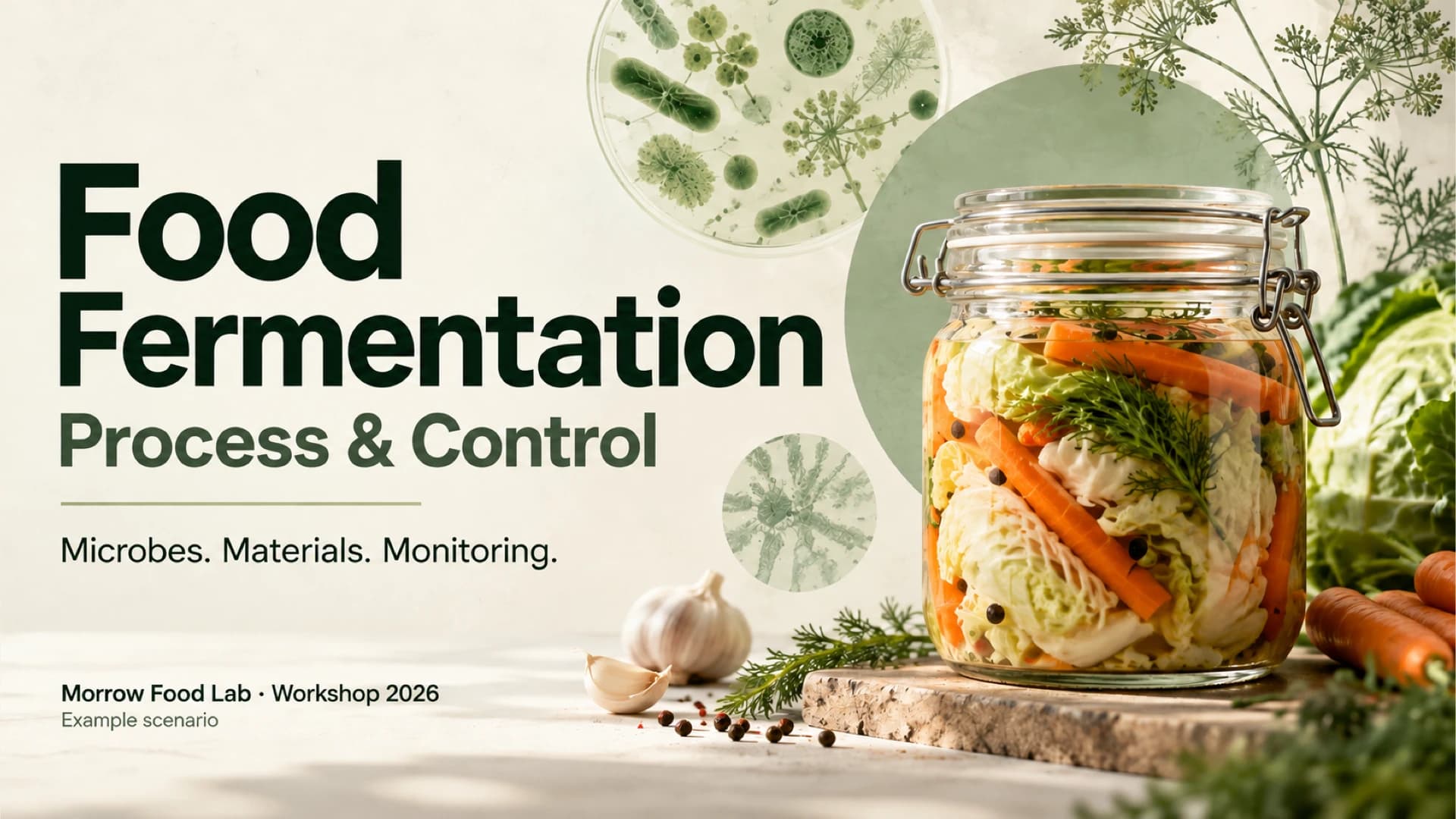
Workshop cover introducing microbes, materials and monitoring through the fictional Morrow Food Lab example scenario.
- • Microbes. Materials. Monitoring.
- • Morrow Food Lab workshop: example scenario.
Complete records for every batch
An illustrative training audit of 20 batch logs compares documentation completeness: inoculation 100%, time 100%, temperature 90% and pH 80%. The figures describe records only.
Show full textCollapse
Match microbes with materials
A teaching comparison links lactic acid bacteria with fermented vegetables and acid formation, yeasts with bread dough and gas formation, and moulds with koji ingredients and enzyme activity.
Show full textCollapse
Follow materials through the process
A four-stage example process connects preparation, culture introduction, fermentation monitoring and finish/review to corresponding batch records. The slide calls for the locally approved product process.
Show full textCollapse
Assign monitoring record owners
A fictional team matrix assigns inoculation, time, temperature and pH records to example owners and lists the evidence for each. Product-specific limits come from the approved process.
Show full textCollapse
Read the documentation gap
The same illustrative 20-log audit totals 74 complete entries out of 80, or 92.5%. A table shows zero missing inoculation or time entries, two missing temperature entries and four missing pH entries.
Show full textCollapse
Turn observations into learning actions
An example action table connects four missing pH entries to rehearsal of the recording step and two missing temperature entries to an instrument-log handover review, with fictional owners.
Show full textCollapse
Review the process and close the loop
The closing slide asks learners to identify microbes and materials, map the process and monitoring records, and check completeness. An example next-action table assigns a log refresh and a repeat 20-log exercise.
Show full textCollapse
Best for
- Teach how microbe groups relate to food fermentation examples
- Present a fermentation process alongside its batch-record requirements
- Run a classroom exercise on missing monitoring entries
- Discuss record ownership in a fictional food-processing team
- Close a training workshop with review actions and follow-up dates
Who this template is for
- Food-science lecturers
- Food technology students
- Food-processing training coordinators
- Production staff trainers
- Quality documentation teams
Features of this template+
- Eight English slides in a 16:9 PowerPoint file, with a Google Slides conversion entry
- Microbe comparison table connecting bacteria, yeasts and moulds to food examples
- Four-stage process diagram aligned with material, culture, monitoring and review records
- Illustrative 20-log audit shown as both completion bars and a reconciled 74-of-80 summary
- Cream backgrounds, forest-green headings and vegetable-jar imagery across the deck
- Fictional record-owner matrix, learning-action table and closing review checklist