Free template
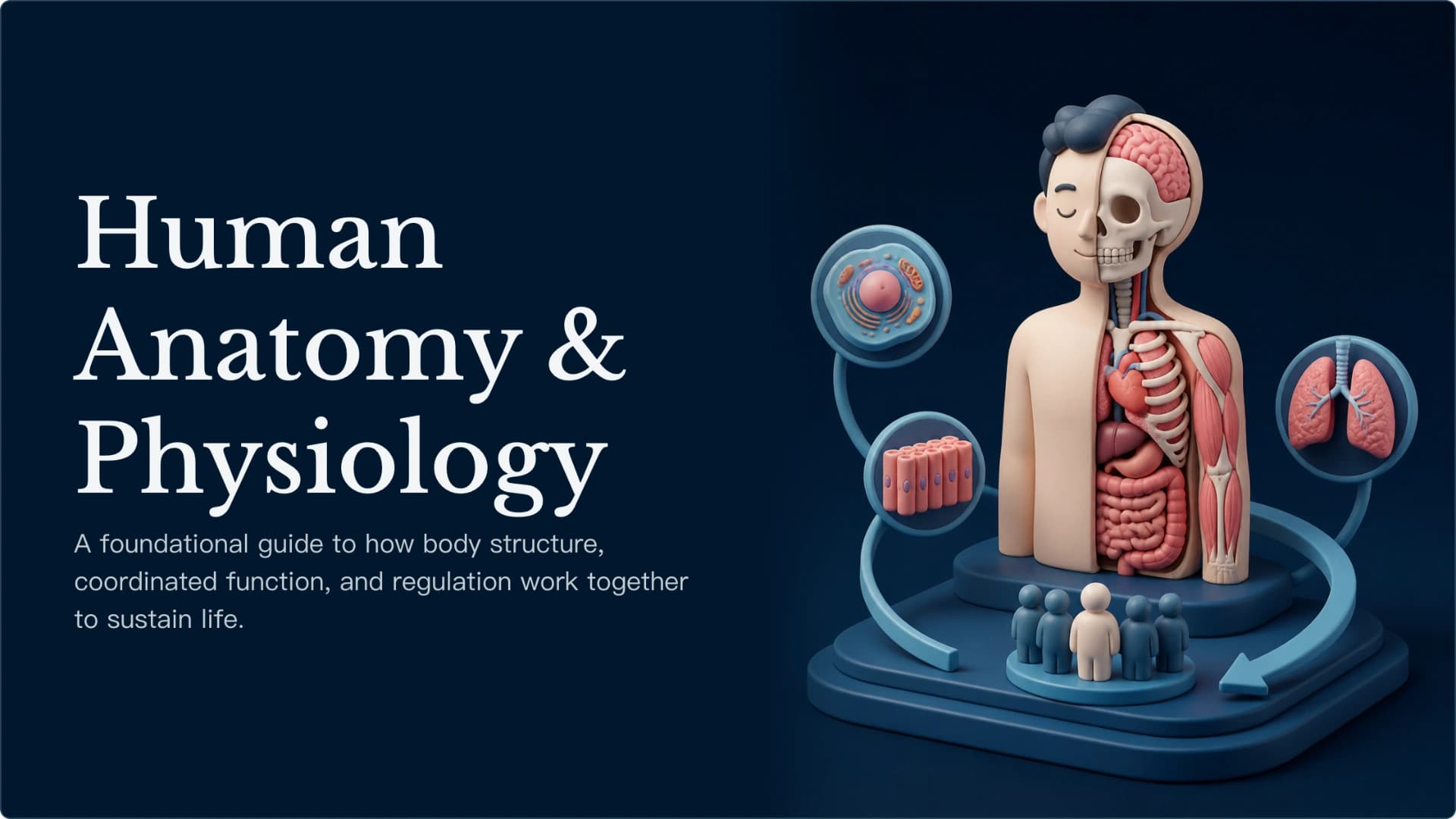
Human Anatomy & Physiology Presentation Template with 3D Learning Slides
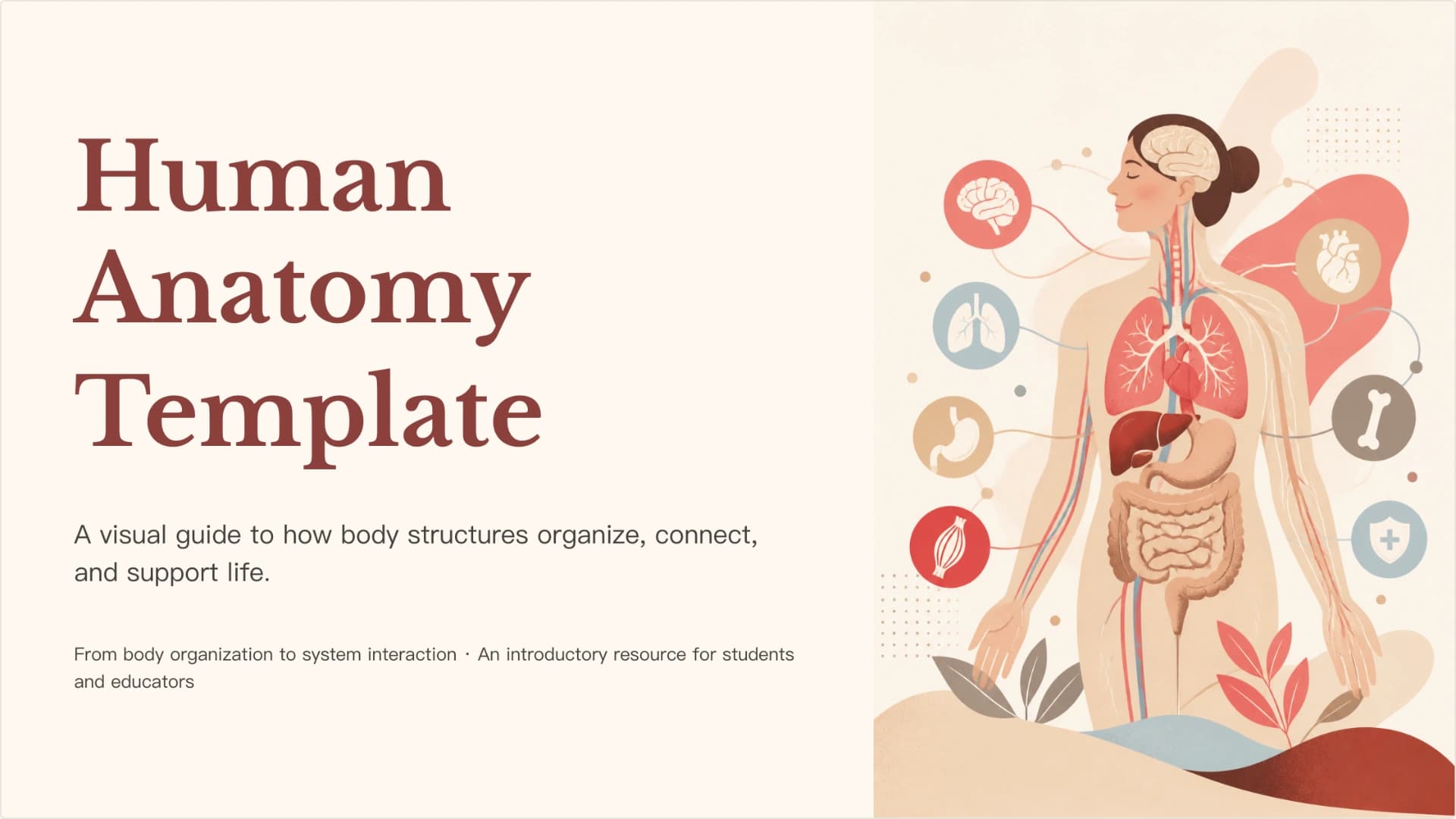
This Human Anatomy & Physiology presentation template is built for lessons, course overviews, and study presentations that need to explain how body structure and function connect. The slide story starts with a 3D cover scene, then moves through body organization levels, anatomical position and directional language, specialized tissues, organ-system coordination, homeostasis, and nervous-versus-endocrine regulation. It closes with systems-thinking and dysfunction slides that help users connect normal physiology to classroom explanation or early clinical interpretation. Visually, the template stands out through a dark navy palette, large serif headlines, and clay-like 3D anatomy models instead of flat textbook diagrams. Signature layouts include a level pyramid, a labeled reference-position slide, tissue cards paired with organ cutaways, an organ-systems relationship wheel, a homeostasis sequence supported by a chart, and a side-by-side regulation comparison. The result is an editable PPT deck and Google Slides template with reusable presentation slides for anatomy teaching, physiology revision, and health science instruction.
Explore DeckGist's AI presentation maker to turn anatomy lecture notes, lab handouts, and PDFs into structured, editable presentations for lessons, revision sessions, or health science training.
Create your own presentation with this template
Keep this template’s layout, colors, and visual style. Just enter your topic or upload your materials.
Template selected
Colors, layout, and visual style will be preserved
Supports documents, PDFs, PPTs, and text files
Generate an editable presentation
AI organizes your content and completes the layout
What’s included
Human Anatomy & Physiology
A foundational guide to how body structure, coordinated function, and regulation work together to sustain life.
The Body Is Built in Connected Levels
Each higher level adds complexity while preserving the relationships established below it.
Show full textCollapse
Anatomical Language Makes Location Precise
A shared vocabulary makes diagrams, physical examinations, and clinical communication precise and reproducible.
Show full textCollapse
Specialized Tissues Make Organs Work
Organ function emerges when multiple tissue types work together, linking microscopic structure to visible anatomy and changing physiological demands.
Show full textCollapse
Organ Systems Share Responsibility for Survival
Survival is an integrated outcome: no organ system operates in isolation.
Show full textCollapse
Homeostasis Keeps the Body Within Range
Common regulated conditions include body temperature, blood glucose, fluid balance, and blood pressure.
Show full textCollapse
Body Regulation Combines Fast and Slow Signals
Show full textCollapse
A Systems Approach Turns Anatomy Into Explanation
Show full textCollapse
Show all 10 slides
Normal Function Makes Dysfunction Visible
Replace the example with the assigned course case or clinical focus.
Show full textCollapse
Connect Structure, Function, and Regulation
A reliable way to explain any body system is to: locate and organize the structure; define its function and system relationships; identify the homeostatic signals and feedback that regulate it; then apply the framework to a health condition or clinical case. Anatomy shows what is built—physiology explains what it does, how it adapts, and what changes when the system is disrupted.
Show full textCollapse
Best for
- Introductory human anatomy and physiology lecture presentation
- Body organization and anatomical terminology lesson deck
- Tissues and organ systems overview for nursing or allied health classes
- Homeostasis and nervous vs endocrine regulation classroom presentation
- Exam review or study-session PPT deck for health science students
- Foundational presentation linking normal function to dysfunction examples
Who this template is for
- High school biology teachers
- College anatomy and physiology instructors
- Nursing educators
- Allied health training instructors
- Pre-med and health science students
- Private biology and anatomy tutors
Features of this template+
- Dark navy slide system with large serif headlines and clay-style 3D anatomical illustrations
- Pyramid framework showing the progression from chemical and cellular levels to organ systems and the whole organism
- Anatomical position slide with directional terms, body planes, and regional reference cards
- Specialized tissue layouts that pair four content blocks with 3D organ and tissue models
- Organ-systems overview and homeostasis slides that combine explanatory frameworks with simple chart support
- Reusable presentation structure designed for PowerPoint and Google Slides, including editable slides on regulation, systems thinking, and dysfunction