Free template
Internship PPT for Research Evidence, Findings & Decisions
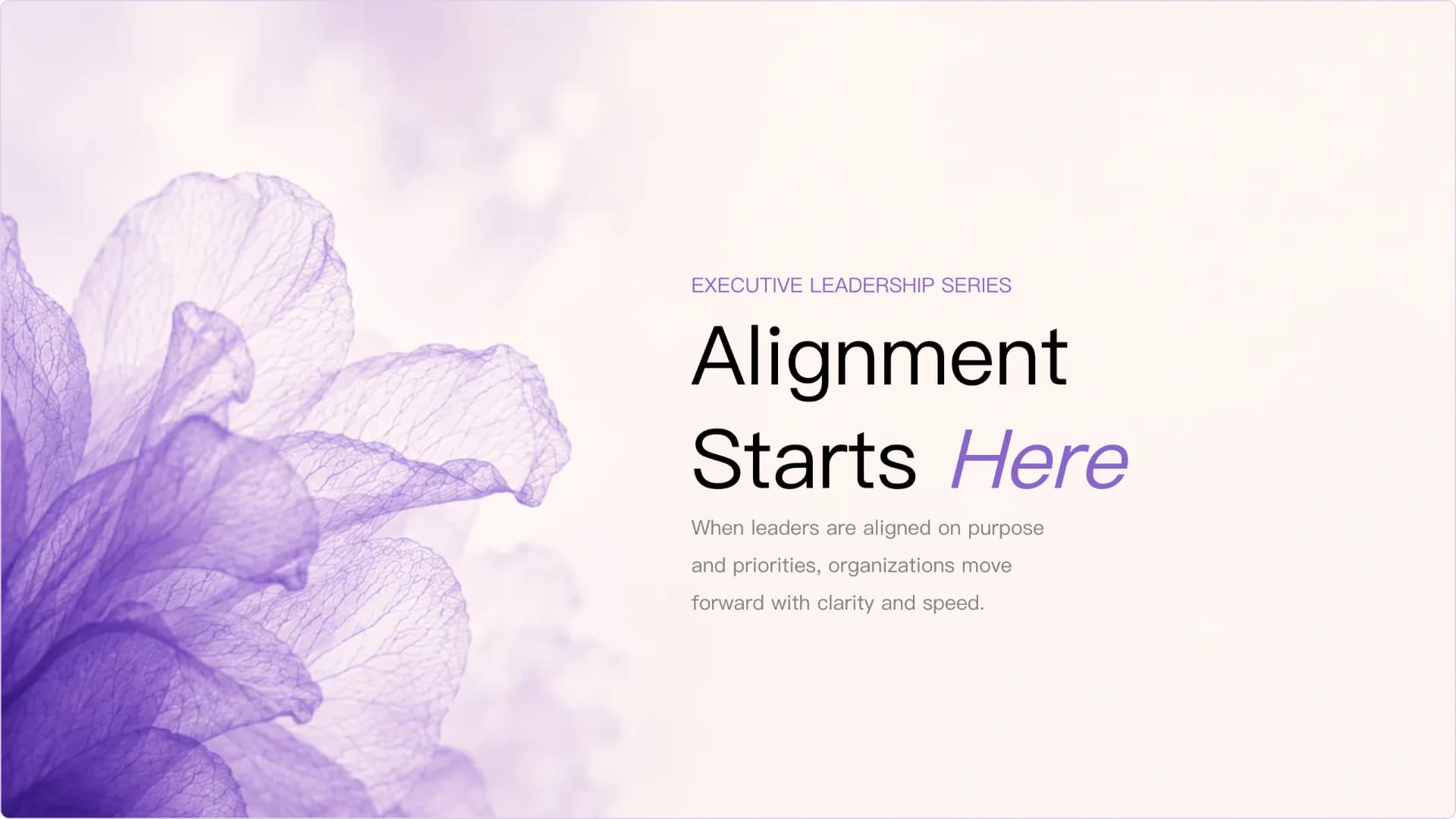
This internship PPT is built for project-based placements where the presenter needs to show how a research question was framed, what evidence was considered, and how a defensible conclusion was reached. The storyline starts by narrowing a broad topic into one central question, then moves through method selection, evidence-base definition, claim boundaries, evidence quality, and confidence. Later slides help present the primary finding, explain its likely drivers and trade-offs, distinguish robust conclusions from conditional ones, and end with a recommendation or clearly defined evidence gap. The structure is especially suitable for research-heavy internship reviews, analytical project debriefs, and academic assessments where reasoning matters as much as activity. Visually, the deck uses expansive white layouts, dark indigo typography, pale-lavender dividers, soft purple floral photography, circular image crops, a four-part ring diagram, comparison panels, and a tapered decision funnel. The result is calm, reflective, and evidence-led rather than task-list driven.
Explore Deckgist's AI presentation maker to turn internship notes and research files into structured, editable presentations.
Create your own presentation with this template
Keep this template’s layout, colors, and visual style. Just enter your topic or upload your materials.
Template selected
Colors, layout, and visual style will be preserved
Supports documents, PDFs, PPTs, and text files
Generate an editable presentation
AI organizes your content and completes the layout
What’s included
Internship Presentation
Framework focus: question → evidence → conclusion. No topic-specific findings are asserted without source material.
Start with one question—not a broad topic
A useful test: the central question should fit in one sentence, and every later slide should help answer it.
Show full textCollapse
The method determines what the evidence can legitimately show
Show full textCollapse
Evidence quality sets the level of confidence
Supported observations can anchor a finding; unresolved gaps should bound the claim.
Show full textCollapse
The primary finding should answer the research question directly
Show full textCollapse
The strongest explanation shows why the primary finding occurs
Use only evidence that improves explanation. Treat an observed relationship as correlation, not causation, unless the research design supports a causal claim.
Show full textCollapse
A credible conclusion makes uncertainty explicit
Name the most consequential limitation explicitly—do not imply confidence or precision the research cannot support.
Show full textCollapse
The evidence should end in a defensible decision
No topic-specific recommendation is supported by the supplied material; the decision remains open until the relevant evidence and constraints are established.
Show full textCollapse
Show all 9 slides
Evidence clarifies the decision—and its limits
The research establishes a defensible conclusion from credible evidence, supporting a clear decision while leaving uncertainty explicit. Use the finding to act within its tested scope—not as a universal claim.
Show full textCollapse
Best for
- Final internship presentations centered on a research question
- Internship research project summaries for academic assessment
- Evidence-based internship report presentations
- Internship findings and recommendation presentations
- Supervisor debriefs for analytical internship projects
- Research methodology and conclusion presentations from internship work
Who this template is for
- University students completing project-based internships
- Research interns
- Internship program participants preparing final reviews
- Students presenting analytical placement projects
- Early-career professionals documenting internship research work
Features of this template+
- Question-framing slide that narrows the presentation to one outcome, population, context, or decision
- Research method slide covering design choice, evidence base, and claim boundaries through three circular floral image panels
- Evidence-quality framework for identifying sources, testing relevance, grading strength, and exposing limitations
- Primary-finding layout with a four-part segmented ring for answer, evidence, execution context, and supporting interpretation
- Conclusion comparison slide separating robust conclusions from conditional conclusions and additional validation needs
- Soft lavender flower photography, large white editorial space, dark indigo typography, pale-purple accents, and tapered decision-funnel graphics