Free template
Oligohydramnios PPT Template for Obstetric Education Lessons
This oligohydramnios PPT gives obstetric and nursing educators an eight-slide lesson on low amniotic fluid that avoids diagnostic thresholds or treatment protocols. The slide story opens on a watercolor cover, shows three things amniotic fluid helps support (protection, movement and lung development), then frames low fluid as less than expected for gestational age and a finding to interpret in clinical context. A four-column information map groups gestational context, membrane history, ultrasound findings and maternal and fetal context, followed by a numbered four-step workflow from gathering information to confirming the follow-up plan. Later slides add a fictional case review table that pairs example notes with discussion questions, three numbered knowledge-check prompts and a source slide citing ISUOG patient information and local professional guidance. Teal, blush and cream watercolor anatomy illustrations keep this medical education presentation calm and classroom-ready, and the editable slides download for PowerPoint or open through the Google Slides conversion option.
Explore Deckgist's AI presentation maker to turn obstetric lecture notes or clinical teaching PDFs into structured, editable presentations on other maternal health topics.
Create a presentation with AI
Enter a topic or upload reference files, then choose a theme to create a new presentation.
Create with a theme
Enter a topic or upload reference files, then choose a theme to create a new presentation.
Supports documents, PDFs, PPTs, and text files
Generate an editable presentation
AI organizes your content and completes the layout
No topic or upload needed
No topic or upload needed
What’s included
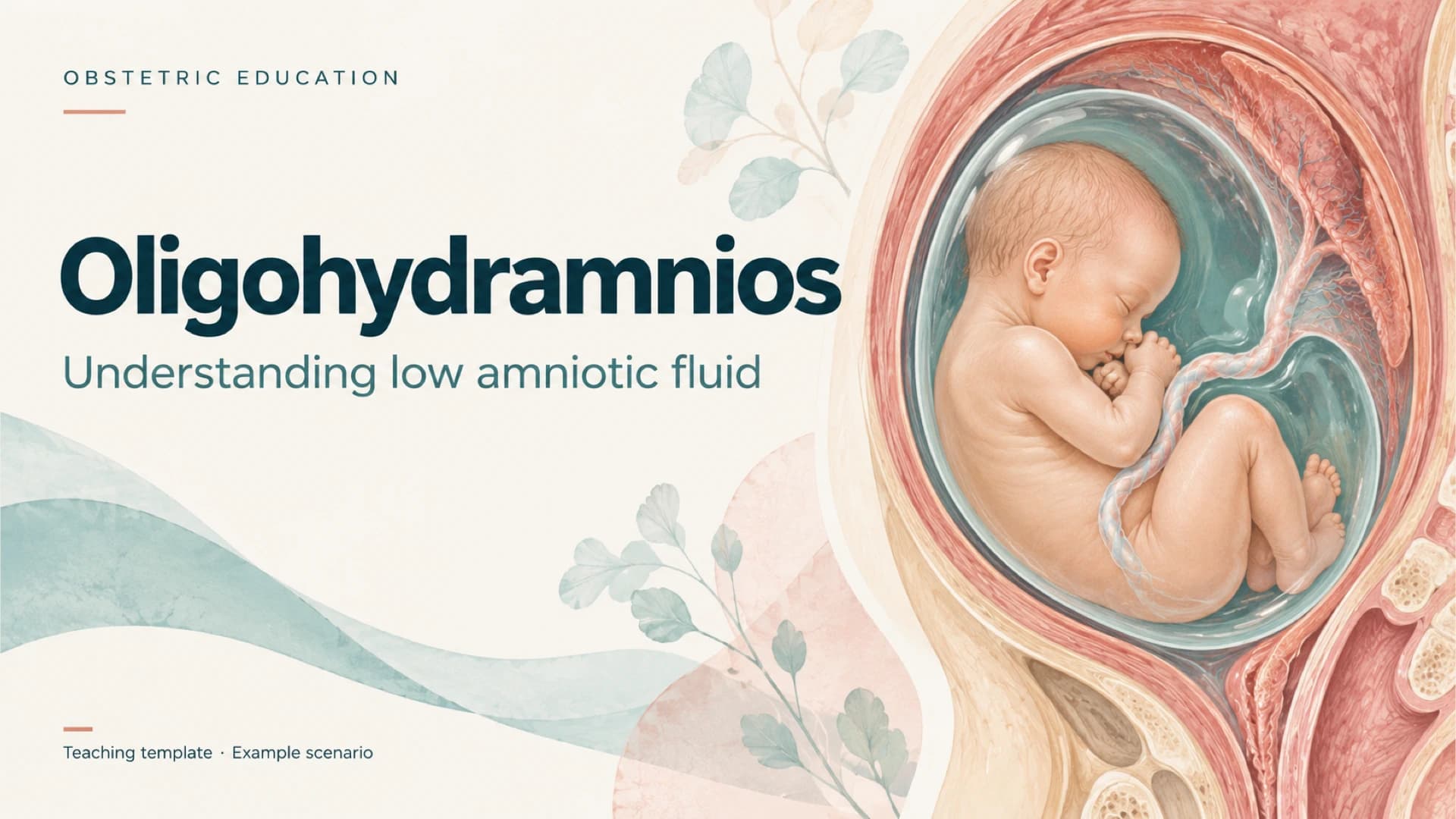
Oligohydramnios: understanding low amniotic fluid
Cover slide for an obstetric education lesson on oligohydramnios, marked as a teaching template with an example scenario.
Show full textCollapse
What amniotic fluid helps support
Three functions to understand before discussing low fluid: protection, movement and development.
Show full textCollapse
What does low fluid mean?
Defines low fluid as less fluid than expected for gestational age, to be interpreted in clinical context with causes and timing left to professional assessment.
Show full textCollapse
Organize the assessment information
An educational information map of key areas to consider when reviewing a finding of low fluid, with no diagnostic thresholds.
Show full textCollapse
From observations to discussion
A simple four-step example teaching workflow to guide next steps, without a treatment protocol.
Show full textCollapse
Case review: make questions visible
A fictional teaching case table pairing each topic with an example note and a discussion question.
Show full textCollapse
Check understanding
Three numbered questions for classroom group discussion about amniotic fluid and low fluid findings.
Show full textCollapse
Keep the conversation evidence informed
Closing source-review slide: describe clearly, ask focused questions and verify sources.
- • ISUOG patient information: Oligohydramnios
- • Local professional guidance and clinical review
Best for
- Teaching an obstetric lecture on low amniotic fluid to nursing or midwifery students
- Running a case-based discussion with a fictional antenatal teaching case
- Walking learners through what to review when low fluid is reported
- Closing a lesson with knowledge-check questions and group discussion
- Introducing evidence sources such as ISUOG patient information in class
Who this template is for
- Obstetrics and gynecology educators
- Nursing and midwifery instructors
- Medical and nursing students on obstetric rotations
- Clinical educators running antenatal case discussions
- Continuing professional development facilitators in maternity care
Features of this template+
- Three-function slide illustrating protection, movement and lung development with matching icons
- Four-column assessment information map explicitly labeled with no diagnostic thresholds
- Numbered four-step workflow from gathering information to confirming the follow-up plan
- Fictional case review table pairing topics, example notes and discussion questions
- Teal, blush and cream watercolor anatomy illustrations with botanical accents
- Editable PPT slides for PowerPoint, with Google Slides available through conversion